Football is the world’s game. It crosses borders, cultures, and classes. It inspires billions, generates headlines, drives economies, and creates heroes. But there’s a truth we must face: there’s no football on a dead planet.
As the ethical agent, I leverage the authentic voices of athletes and creators to drive positive and societal change for people and the planet. I believe in the power of sport — not just as entertainment, but as a platform for impact. We partner with athletes and creators that want to work with ethical sports brands and clients. And right now, that means confronting the climate crisis head-on.
Football doesn’t exist in a vacuum. The pitches we play on, the stadiums we fill, the communities we support — all depends on a healthy, functioning planet. Climate change is already disrupting fixtures, damaging infrastructure, and endangering lives. The warning signs are everywhere, from floods postponing matches to extreme heat threatening player safety.
I recently met the founder of FootballForFuture, Elliot Arthur-Worsop, a non-profit leader championing sustainability. Elliot and his team empower the football industry to embrace environmentally conscious practices, recognising the crucial link between climate action and the future of the sport.
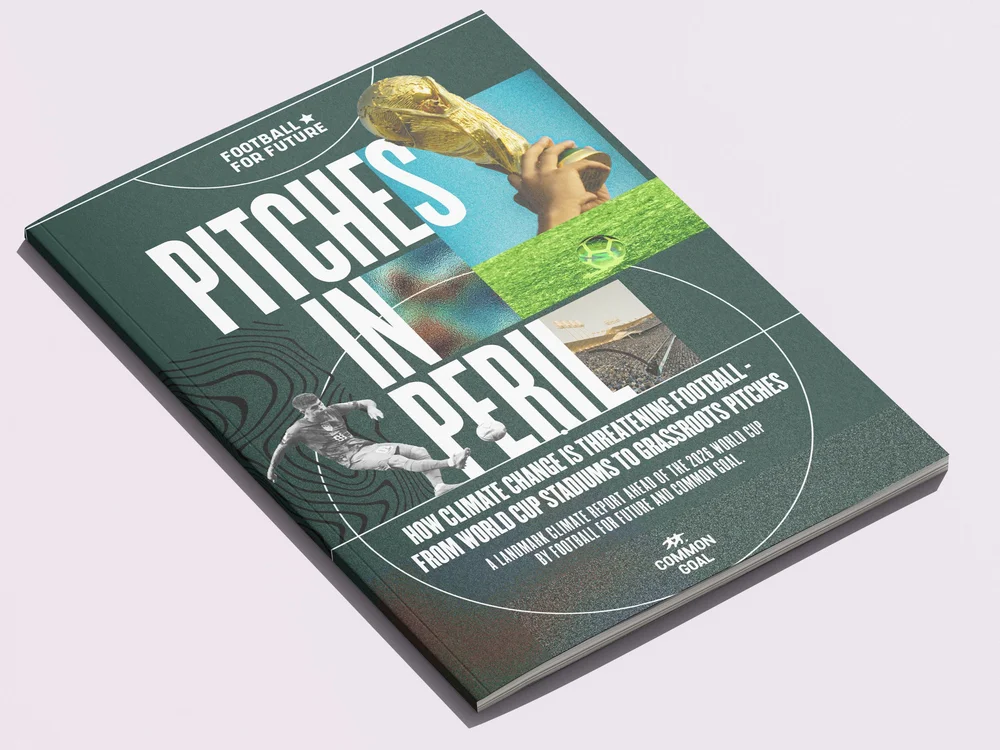
We’re working on an exciting FIFA World Cup project with Common Goal that I’ll be able to share more about in the coming weeks. Football for Future and Common Goal are launching a climate risk report that makes the economic, cultural, and health impacts of climate change relevant to football’s biggest moment.
But where there’s a crisis, there’s also opportunity. Football has the power to lead and below I’ve summarised the four key areas I believe the beautiful game can save football:
- Influence Beyond the Pitch
Athletes are among the most influential voices in the world today. A single Instagram post from a footballer can reach more people than most climate campaigns. That influence can be used to raise awareness, shape attitudes, and spark action. When players speak out, people listen and act. - Clubs and Leagues as Catalysts
Football clubs are already beginning to adapt, with many now employing full-time ESG leads and implementing sustainability practices —solar-powered stadiums, vegan menus, or carbon offsetting. These efforts matter. But we need more than green gestures — we need systemic change. Clubs can lead by example, embedding sustainability into every part of their operations and demanding the same from sponsors and partners. - Football’s Unique Community Power
Football brings people together like little else. From grassroots teams to Champions League nights, the game builds identity, loyalty, and community. Those same values can be channelled into environmental action. Imagine clubs encouraging fans to use public transport, rewarding supporters for recycling, or running climate literacy campaigns. The reach is limitless. - Players as Planet Champions
As the Ethical Agent, I help athletes find their voice and platform on issues that matter. We’ve seen first-hand how powerful it is when players align their personal values with purposeful action. Players can be the heartbeat of a movement.
This isn’t about perfection. It’s about progress. It’s about football doing what it has always done best: uniting people, inspiring change, and standing for something bigger than the game itself.
The truth is, if we don’t act now, there won’t be a pitch to play on or fans to fill the stands. There’s no football on a dead planet, but there is hope on a living one. Let’s protect the game we love by protecting the planet.